Time

It seems as if the themes of living well and impermanence have literally been hitting me in the face lately.  We just recently ordered “Netflix” and since it’s new to Canada they offered a free monthly subscription.  I could probably write an entire entry on its amazing value and convenience but will save that for another time.  I’ll just add that it’s especially handy if you don’t plan on living in the same city forever and are weary of carrying your DVD collection great distances.  We will probably be moving elsewhere (anywhere) in a few years once we have completed our degrees so we’ve decided to stop buying movies till we have a house or at least feel like we are moving towards being more settled.  It’s been kind of difficult because we love films.  Like novels some well-crafted movies do address the beauty and difficulties of humanity.  I believe that we can gain a better understanding of difference and commonalities through these narratives and that’s very valuable.  I’m not even talking about just the critically acclaimed or independent dramas. Comedies make us laugh which is so helpful and positive.  Some people say, “I don’t have time to read fiction” as if it’s a testament to their productive lives.  Although I understand the balancing act required to meet all of our professional and personal responsibilities, I think we can also gain from creating a little bit of time to let art into our lives.

To address the themes of time and mortality, two influences have really affected me the past few days.  I watched a film called “One Week” (2009) starring Joshua Jackson and directed by Michael McGowan that narrates the journey of a man diagnosed with a terminal disease.  The protagonist grapples with these implications by taking a solo motorcycle ride across Canada.  He makes many stops at various landmarks and as a proud Canadian, my heart did swell at the modesty and earnestness of the film.  There really was something special captured in Jackson’s performance and the cinematography that will make me return to this film even when I am away living elsewhere.

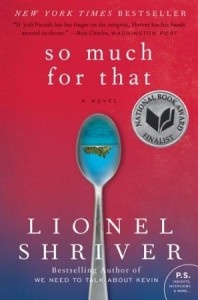
I also just finished a novel called “So much for that” by Lionel Shriver that deals with issues of illness and the lifelong dream to escape to the developing world to make your nest egg last longer.  This book was not an easy read because it’s never enjoyable to hear of sickness and the inevitability of death.  I admire Shriver for taking on such a task with poignancy and even a bit of anger to say, if a loved one is going through pain, be there for them.  Words don’t mean anything if you don’t put in the time to support someone when you are needed most.

I really just wanted to write about these themes this week because it’s integral to have these type of reminders ever so often and to crash into something that shifts your focus.  I’m victim to it myself: to withdraw when I fear losing someone important to me.  But I am working at facing up all of it: the harsh stuff with the good.  Because really, the time we have with people is so valuable.
To not be a ‘woman’ at all

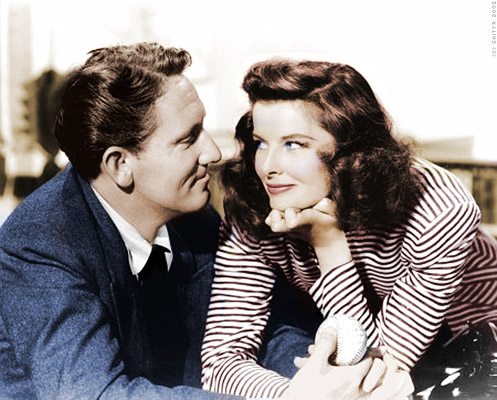
The other night I watched “Woman of the year” (1942) which is the first movie that Spencer Tracy and Katherine Hepburn worked on together.  Their on-screen chemistry is legendary and the pair went onto to collaborate on nine films in total.  In their personal lives they had a long partnership but never married because Tracy being a Catholic could not divorce his wife.  He lived with Katherine while being estranged from his wife till his death and the couple maintained a “secret” relationship.  When Spencer Tracy died Katherine called up his wife and asked to be friends and to offer help raising the kids but his wife responded “oh, I thought you were a rumor.”  Pretty heavy and complicated stuff.

With regards to the film “Woman of the year” I absolutely loved it.  Tracy is a gruff sports writer and what you would classify as a “man’s man.”  As problematic as classifications always are, let just say that he’s a man who would want his wife to cater to his every emotional and material need.  However, he’s attracted to and marries Hepburn’s character Tess who is a political analyst, intelligent and busy. After their courtship the film documents all the strain that is being but on the couple by Tess’ schedule and travel demands.  When the relationship has deteriorated Tracy indicates that Tess may be awarded “woman of year” by the public but she’s not a “woman” at all.  I promise that there is a happy ending and a famous breakfast scene where Tess tries to cook for him and show him that she is a “woman.”  The scene is pure comic genius.

No matter how I may have gasped at her attempts at reconciliation and the concessions she makes in her career and identity, these were the pressures placed on women in the 1940s.  Although circumstances have changed for woman today I don’t believe that it’s completely gone.  My own husband and those of my other friends are willing to help out with household duties that men of another generation would have been appalled at.  However, I believe that it is way more complicated than that.  There are definitely generational differences that I observe even in my own life.  Our mothers are women who fought hard to have careers and maintain the family life at the same time.  Whether these goals were met through paid childcare or other assistance, they are proud that many of them “have it all.”  I sense an anxiety there that they have to come home exhausted and still cater to the needs of their families with perfection.  Is it wrong that I don’t feel the same sort of pressure?  Is it because I’m just lucky to have a supportive and actual “partner” who puts in the time to develop our relationship and home?  The truth of the matter is that I feel like for many women of my generation careers are a given, giving up employment to be mother is not something to be ashamed of, and every single thing does not have to be perfect anymore.  If being a “woman” and an empowered one at that no longer has the baggage of putting on a facade I am grateful.  This is not to say that I don’t acknowledge all of the work and sacrifices that came before us to get us where we are today.  I just hope to raise a generation after us who knows that the most important thing is choice, acceptance and the embracing of frailty.  There is something beautiful in knowing that your sense of self is strong and ever-changing and to own what you choose to build for yourself.  I believe it’s crucial to take responsibility for your choices, really being in the moment and supporting other women on their paths.