After the party

I once said “there’s nothing like a social climber trying to prove their worth with a major celebration.”  Wow, that sounded much harsher in print but I don’t mean for it to be.  We’re all social climbers, and probably always will be unless you’re Prince William.  Negotiating the intricate workings of the class system is inescapable and we try to survive through markers of privilege and accomplishments.  It requires work but those who are best make it seem effortless.  Because of the ease with which they read contexts and people they are often rewarded with praise, love and popularity.  There’s probably a reason why the word “cool” denotes lack of passion.  Those who know best could care less what you think of them, or at least they give that impression, and it’s irresistible.  One of my favourite phrases is “fake it till you make it” because it denotes the performance aspect of confidence, backed up with some level of competence.  Till you’re established on solid ground I think most of us have to not be disingenuous per say, but sometimes pretend to be more than the sum of our parts.  I guess it’s a good form of hustling right, and you are nowhere without working hard and having some of that finesse.

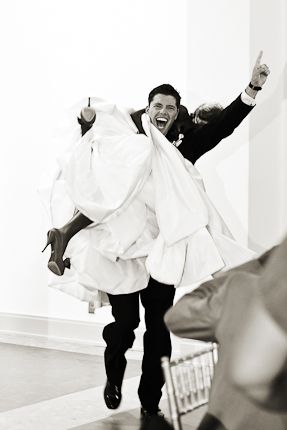
One of the biggest performances people take part in is through their wedding and I feel like this is just an extension of the social project.  One of the curses of grad school is that you start to see through everything.  My husband loves it because it’s a part of his nature but I just find it exhausting sometimes.  On occasion it’s a bit more fun to enjoy things at the surface level right?  But, now I can’t even help it if I wanted to and it’s made worse by the fact that I married someone who sees the same strings on people’s show.  Don’t get me wrong, we are the first to point out our strings too, it’s just that we can sometimes push each other on and be a bit judgemental.  Returning to the wedding, I always love a good party and so I found planning my own not a source of stress at all.  The only difficult part was trying to balance the budget and this is where I continually reminded myself of the performance aspect.  Did I really need that centrepiece?  What am I trying to say with it?  Do I need it to prove something?  This was also coloured by my own perspective of how I was about to enter marriage, not a fancy dress ball.  I preferred to be grounded.  From the minute I started to plan the whole thing I knew that it was a commitment to work.  I regret being way too pragmatic now because I think it took away some of the romance of it.  If I had to do it over that’s the only thing I would change—to have a more balanced approach of practicality and emotions.  But really, when you already live with your husband, do you need to be apart the night before the wedding?  I didn’t give into that superstition or tradition because when you’ve known each other since you were 14 and started dating at 16, you go through a lot and you’re more confident that you can probably get though anything.  So, when I designed our wedding day, the most important thing to me was that it represented us.  There’s definitely some negotiation involved in the process and you make concessions due to cost and parental wishes, but that’s the one thing I didn’t want to lose.  Some people say that they barely remember their wedding day but I feel lucky that this was not the case for me.  Weather-wise, there were thunder storms throughout the whole day, less than ideal yes but it was almost a relief.  As soon as that happened I literally just said forget it, I’m going to have fun.  The pressure was gone and I began to relish in the most important part: the people.  We just felt like it was one of those rare moments when the whole room was filled with people, from all over the world, to love us and wish us the best.  So, I ate my dinner, enjoyed the company of my best friends in the wedding party, did not walk around the room once during the reception, danced and drank some vodka.  You only get one day and my advice to a bride is to remember your partner, be with each other and float in the warmth.  Having such a day gave me something to come back to in my marriage.  Through the hard times, because trust me we’ve had plenty after that party in August six years ago, I try to reconnect with that day and how I felt.  There was a support system there, our guests wanted our union to succeed, to thrive, and so it made me return to him, us, our history.  That’s what your wedding day is for.
Image

Losing

“You can be lost anywhere.”  This is one of my favourite quotes from “Felicity” a TV show from the late 90s.  If you’ve never heard of it you are missing out on an underrated but excellent series that portrays the aftermath of a woman’s (Keri Russell) decision to follow her high-school crush (Scott Speedman) across country to attend university.  Describing the premise this way does not give credit to how the writers slowly draw out and build her character throughout the seasons.  You learn that she didn’t follow a boy, she was trying to escape her overbearing parents and stifled life.  Again, “you can be lost anywhere.”  It’s so true isn’t it?  It is sometimes so tempting to bolt and let go of problems, schedules and monotony.  Journeys are great and they can help build parts of yourself, but I don’t think they can be counted on to really take apart your inner conflicts.  These types of trips and experiences make cinematic magic and there have been various films (Before Sunrise, Eat, Pray, Love, Stealing Beauty) that address these encounters.  I want to discuss two of them now and how they approach these explorations in different ways.


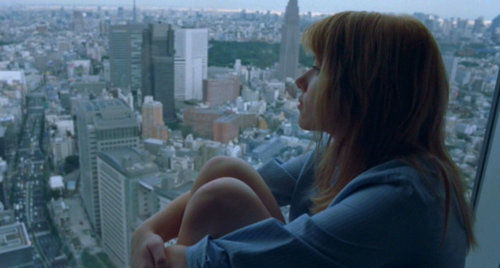
In Sofia Coppola’s Lost in Translation you are privy to the friendship between two travellers in a Tokyo hotel.  Lets put aside the problematic aspects of the portrayal of Japanese people and culture for this discussion.  In her subtle and delicate style Coppola gets to the underlying desire, love and attraction between two individuals who are lonely and dissatisfied with their current relationships.  They are bonded by their need to connect with someone, anyone, who can draw out why exactly they are staying in such an unfulfilled state.  Time seems to pass slowly and the pacing is what really makes this film.  You have to be just as patient as the characters themselves who are finally slowing down to enjoy time with someone who can actually see them.  But there is a limit and they will return to their lives and never meet again.  Bob will reconcile with his wife, career and duties but you have a feeling that Charlotte has built the courage to let go of trying to sew up the holes in her marriage.  Yes, they don’t end up together and they never cross the line but that’s probably the most meaningful part.  It’s less contrived as a result of their restraint and more meaningful that they were both the catalyst for each other, however brief their relationship.  That they woke up.


I believe that Kat Coiro is also trying to achieve this in her work And while we were here where a woman (Kate Bosworth) tries to rescue her quickly failing marriage.  There has been a trauma that has caused a huge divide between her and husband but she accompanies him to Italy to try to repair their partnership.  When he’s working she sees the sights and tries to complete a book documenting her grandmother’s experiences in the second World War.  This is where she meets a younger man who starts to pursue her and although she initially resists she is drawn into his lust for life, which in my opinion can only exist at a certain age and specific context.  They begin an affair and she decides to leave her husband, not for the young man per say, but for herself.  Now this is where I start to ask questions and all of the cliches start to grate on me.  She leaves her accomplished, beautiful, classical violinist husband for a “boy” (I use this word for a reason) in shorts, tank tops who’s about go to Tibet for a “spiritual” journey?  Yes her husband was emotionally distant but is that a deal-breaker?  I don’t necessarily think it was him per say, their marriage just had had too many disasters and there was no more room to heal.  Maybe it would have been more believable if the actor portraying the young man wasn’t so incredibly annoying.  Jesus Christ, I know you are so excited to explore the world but calm down.  The real stars of the movie are Capri and Kate Bosworth’s understated performance and wardrobe.


What I drew from both these films just reiterates that quote though, that your laundry list of issues will follow you anywhere.  But it can be much easier to heal and gather yourself when you are away from the people and places that will just remind you of the past.  There’s also more opportunity to meet new people and have more experiences somewhere new.  Perhaps it’s not a bad idea to buy that airline ticket, you just have to remember that you also have to work on yourself when you land.

Image

Two magazines

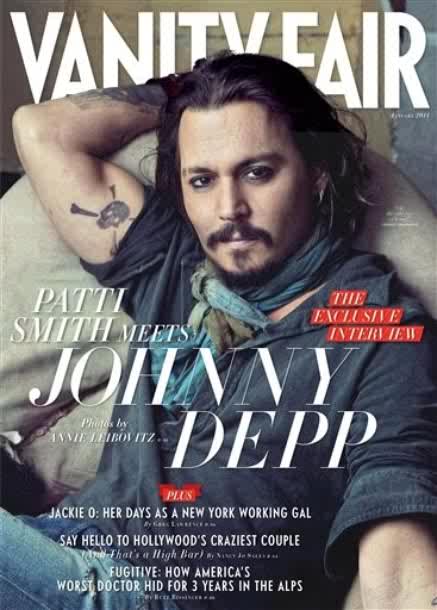
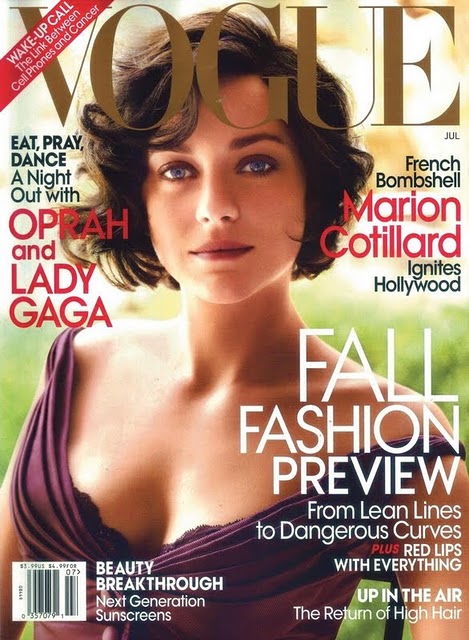
I don’t know about you but I used to spend so much money on magazines.  Prior to living in Thailand for a few months where it was just absurdly expensive to buy English-language fashion publications, I could easily buy a magazine or two a week.  Folks, it does add up, especially when they are now about $6 a pop.  So, when I returned home I decided to evaluate what I liked about each magazine and try to find two monthly staples.  The two magazines I’m discussing focus on fashion and culture since I read most of my political issue articles online.  Forced to limit myself to two they are: Vanity Fair and Vogue.

And here are some of the reasons why:

1) They both have absolutely gorgeous advertisements.  Some complain that most fashion magazines are just that–ads–but this is one of the reasons I love them.  Not only are they visually appealing images of beautiful people and products, but you can also analyze them for the audience they are looking for.  When you frame it this way it becomes fascinating!  For example, a Chanel ad features a very different woman from the Gucci ones.  Why is that?

2) Vogue has a bit more depth than other magazines targeted towards women.  Although the strength of each issue varies, the feature articles profile the work of interesting people, beautiful homes, travel and some light political pieces.  I personally prefer these articles to finding out “10 ways to please your lover” or the number of stomach crunches you need to have a flat stomach.

3) While the clothes and accessories featured are extremely expensive and for a certain portion of the elite, they are still artistically beautiful.  Much of it is obviously not ready to wear but isn’t that the point?  If I wanted to see practical clothes I could just go ride the subway.

4) Vanity Fair has an amazing mix of cultural and political articles that you can gradually read throughout the month.  The quality of the writing is also pretty consistent.  I almost compare reading VF to having whole wheat bread–it will keep you satisfied much longer.

So, with that I’m looking forward to next month’s issues.